In the world of conservation, one truth is becoming increasingly clear: lasting environmental change is only possible when the people most affected by these efforts are placed at the centre.
This belief is not just a guiding principle for The SEA People—it’s the foundation upon which our entire mission and vision are built.
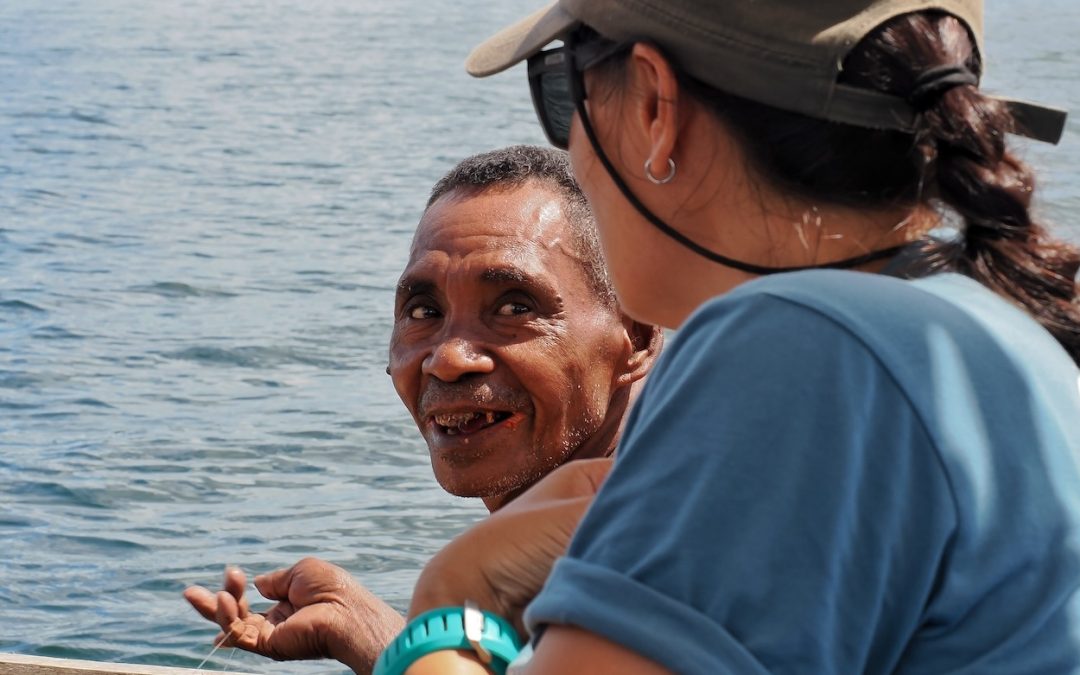
In Raja Ampat, one of the last marine wildernesses on Earth, we see firsthand how local communities hold an incredible amount of local ‘natural world’ knowledge, that could (and should) be incorporated into conservation efforts in order to drive greater, more meaningful conservation impact and environmental change. These communities, many of whom are often overlooked or under-represented in decision-making processes, possess the knowledge and insights that could be used to inform and enhance the solutions needed to protect their natural surroundings.
In our work, over the years we’ve seen that conservation strategies must go beyond the immediate environmental impact; they must address the socio-economic realities of the communities involved. For example, while Marine Protected Areas (MPAs) are crucial for preserving marine biodiversity, they can also restrict access to traditional fishing grounds if not designed with community input. This can inadvertently harm the very people who depend on these resources, undermining the long-term success of the conservation effort. (Please note: Raja Ampat’s MPA’s were designed in close collaboration with local communities).
Our commitment to a community-centered approach stems from years of learning and adapting. Since our inception, we’ve recognized that effective conservation is about more than protecting species and habitats; it’s about empowering the people who live alongside them.
This approach has led us to prioritise the voices, needs, and perspectives of local people in Raja Ampat.
Our Yaf Keru Reef Restoration and Conservation Program embodies our people-centered approach by engaging local communities not just as participants but as active participants and leaders in the conservation process. From the very inception of the program, local people played a crucial role in providing historical context and insights into how degraded reef ‘used to be’, identifying the causes of degradation, and offering insight into local environmental factors that could influence restoration success. This deep, community-rooted knowledge is essential, as it allows us to tailor restoration efforts to the unique conditions of each site.
Through other initiatives, such as training and certifying local Coral Gardeners and integrating local knowledge with modern conservation techniques, we are creating a model where environmental stewardship and community well-being go hand in hand. This not only helps protect Raja Ampat’s unparalleled biodiversity but also promotes sustainable livelihoods, food security, and cultural preservation.
By engaging local people in this manner, as participants rather than passive beneficiaries, we’re not only restoring and protecting coral reefs, but also restoring and protecting a sense of ownership and responsibility within the community, whilst providing full time employment. This model ensures that conservation efforts are sustainable and that the benefits are felt by those who rely on these ecosystems the most.
Our journey is one of continuous learning. We strive to build genuine relationships with our partners in Raja Ampat and around the world, where both successes and challenges are seen as opportunities for growth. By embedding learning practices into our daily work, we ensure that our conservation efforts are adaptive and responsive to the needs of the communities and environment we serve.
Mobilizing the power of people—whether as local leaders, young adults, women, children, environmental stewards, or participants in conservation activities—is how we aim to achieve the transformative change that Raja Ampat, and indeed the world, so desperately needs.
It’s through this collective effort that we can help safeguard the future of our planet’s most precious ecosystems and the communities that depend on them.
At The SEA People, we believe that the path to true conservation lies in the hands of the local people. By placing communities at the heart of our efforts, we are not only protecting the environment but also fostering a sustainable and equitable future for all.
For more on Yaf Keru – click here
To see our Impat Map – click here
Photo Credit: Greg Johannes