The crown-of-thorns starfish (COTS) is a large, venomous starfish known for their voracious appetite for hard corals. Found throughout the Indo-Pacific region, COTS play a natural and important role in coral reef ecosystems by consuming faster-growing corals, thus allowing slower-growing species to thrive and maintaining coral diversity. However, under certain environmental conditions, such as increased nutrient levels from agricultural runoff, COTS populations can surge, leading to outbreaks. These outbreaks can overwhelm the natural balance, resulting in significant hard coral loss and reef degradation. In extreme cases of outbreak, such as the Great Barrier Reef in Australia, large areas of reef have been affected: coral cover on surveyed reefs in the GBR declined 50% between 1985-2012, with COTS responsible for almost half of this decline (Australian Government, Great Barrier Reef Marine Park Authority).
COTS outbreaks have become a focal point of concern for marine conservationists. The starfish’s ability to rapidly multiply and devastate large areas of coral reefs has prompted various strategies for monitoring and controlling their populations. Understanding the life cycle and behaviour of COTS is crucial for developing effective management plans. These plans often involve a combination of biological research, community engagement, and direct intervention methods to mitigate the impact of outbreaks and protect vulnerable reef systems.
A pro-active approach to
COTS in Raja Ampat
Whilst COTS are a species native to coral reefs in the Indo-Pacific region, Raja Ampat has not been immune to (area specific) COTS outbreaks. These outbreaks threaten the health of coral reefs in affected areas, which are vital for the local ecosystem and the livelihoods of communities that depend on them. Recognizing the urgency of the situation, in collaboration with local stakeholders, The SEA People initiated a comprehensive management effort to address this issue. This approach combines scientific monitoring, community training, and active intervention to manage and mitigate the impacts of COTS.
The collaborative efforts focus on manual intervention (culling via specific technique, and/or manual removal of COTS) real-time data collection and analysis to track the extent of COTS outbreaks and the effectiveness of mitigation activities. By utilizing advanced technologies and interactive maps, we can digitally visualise the spread of COTS and coordinate timely responses as needed. This data-driven approach allows for adaptive management, ensuring that conservation strategies are continually refined based on the latest information.
field based, data driven
Monitoring & Reporting
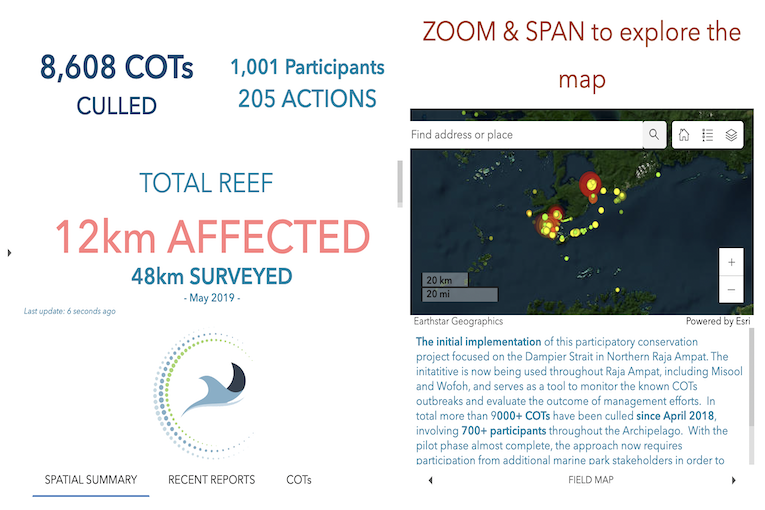
Effective management of COTS outbreaks relies heavily on accurate and timely monitoring. The SEA People have implemented a robust system for collecting real-time data on COTS sightings and intervention efforts. This system includes an interactive map that displays the locations of reported COTS outbreaks and ongoing mitigation activities. The map serves as a crucial tool for coordinating response efforts, enabling conservation teams to prioritize areas most in need of attention.
In addition to technological tools, the success of management and monitoring efforts depends on the active participation of local communities and stakeholders. The SEA People have established a network of trained individuals who regularly report COTS sightings and contribute to data collection. This community-based monitoring approach not only enhances the accuracy of data but also fosters a sense of ownership and responsibility among local residents. By involving the community in conservation efforts, The SEA People ensure a more sustainable and effective response to COTS outbreaks.
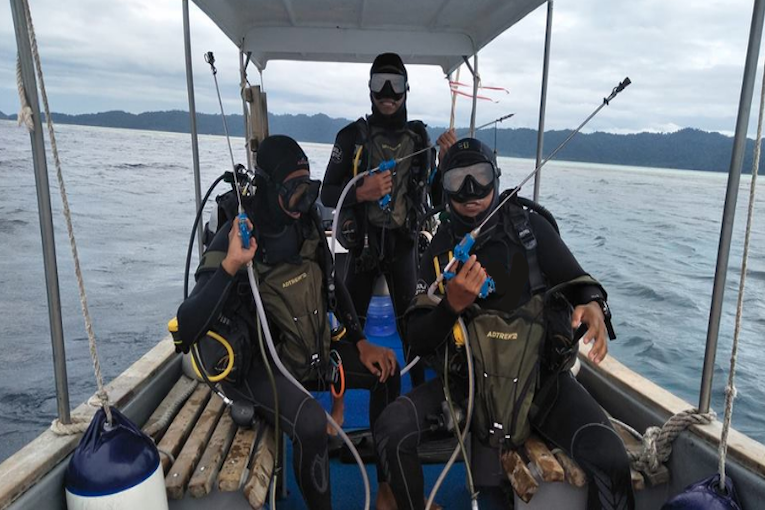
The success of COTS management efforts in Raja Ampat relies on the active involvement of the broader community. Individuals can contribute by participating in COTS monitoring and removal events, reporting sightings, and supporting conservation efforts through donations. By engaging in these activities, community members and visitors play a crucial role in protecting the coral reefs that are vital to the region’s biodiversity and local livelihoods.
Supporting The SEA People’s initiatives not only helps control COTS outbreaks but also contributes to broader conservation goals. Donations and volunteer efforts enable ongoing training, data collection, and the implementation of effective management strategies.
By working together, we can ensure that Raja Ampat’s coral reefs remain vibrant and resilient, supporting the diverse marine life and communities that depend on them.
COTS Outbreaks in Raja Ampat:
An Interactive Map
Click HERE to access the interactive map on your mobile device.
COTS OUTBREAKS
Report culling or sightings

100% of your donation goes to
the field.
If left unchecked, 90% of coral reefs will be threatened by 2030, with almost all reefs facing, high, very high, or critical threat levels by 2050.
If we don’t act now, future generations will not have the privilege of seeing a live coral reef, let alone receive the benefits that coral reefs provide, including food, coastal protection, livelihoods and medicine.
In Raja Ampat, Indonesia, the most biodiverse coral reefs on Earth are under threat; rapid and unsustainable development combined with climate change threaten the future of these reefs, along with the food security, heritage and livelihoods of many.
Your contribution today has a direct impact in enabling our team to work with local people to Restore, Protect and Conserve reefs in the world’s last remaining coral stronghold.
We cannot do it alone, but with your contribution we can do it together.
100% of your donation goes to
the field.
If left unchecked, 90% of coral reefs will be threatened by 2030, with almost all reefs facing, high, very high, or critical threat levels by 2050.
If we don’t act now, future generations will not have the privilege of seeing a live coral reef, let alone receive the benefits that coral reefs provide, including food, coastal protection, livelihoods and medicine.
In Raja Ampat, Indonesia, the most biodiverse coral reefs on Earth are under threat; rapid and unsustainable development combined with climate change threaten the future of these reefs, along with the food security, heritage and livelihoods of many.
Your contribution today has a direct impact in enabling our team to work with local people to Restore, Protect and Conserve reefs in the world’s last remaining coral stronghold.
We cannot do it alone, but with your contribution we can do it together.
Copyright © The SEA People 2016-2026. All rights reserved. This website is copyright monitored and protected.
Yayasan Orang Laut Papua is a registered NGO under the Ministry of Law and Human Rights Republic of Indonesia. Number AHU-0016408. Year 2019. The SEA People is a registered Charitable Association under the Gouvernement de la République in France (Numero Identification Siren 853074300) and serves as an administrative and fundrasing base for supporting the fieldwork of Yaysan Orang Laut Papua. Privacy Policy Terms & Conditions