
Climate change is one of the most pressing threats to coral reefs globally. Rising ocean temperatures and increasing levels of carbon dioxide (CO2) are driving phenomena such as coral bleaching, ocean acidification, and sea level rise, all of which are rapidly degrading coral ecosystems.
Coral Bleaching
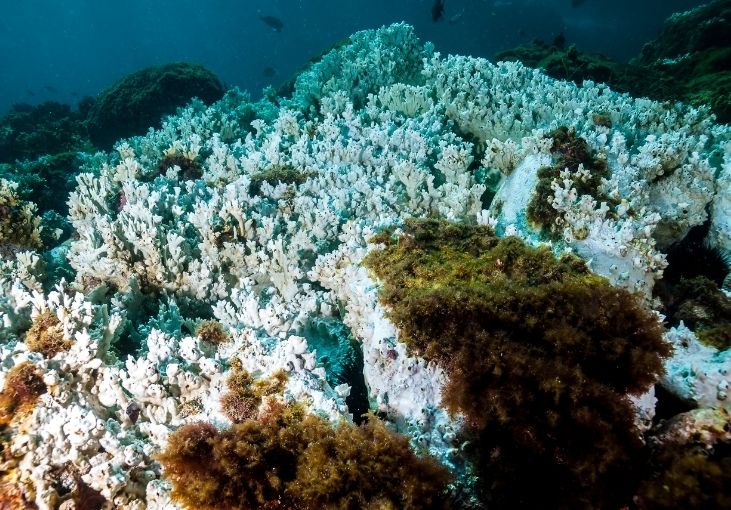
As ocean temperatures rise, corals experience stress and expel the algae (zooxanthellae) that provide them with energy and colour. This process, known as coral bleaching, leaves corals white and highly vulnerable to disease, starvation, and eventual death. Widespread bleaching events have been reported across the world, often linked to prolonged periods of unusually warm water.
Bleaching doesn’t necessarily mean immediate death, but prolonged bleaching without recovery time between events can lead to massive coral mortality, leaving entire reef systems barren and lifeless. This has ripple effects on marine biodiversity, as reefs provide shelter and food for countless marine species.
Ocean Acidification
As the atmosphere absorbs more CO2, the ocean absorbs a significant portion of it, leading to ocean acidification. Increased CO2 reduces the pH of seawater, making it more acidic. This affects coral’s ability to build and maintain their calcium carbonate skeletons, which are essential for their structure and growth. Weakened coral skeletons mean that reefs are more vulnerable to physical damage from storms and less capable of recovering from other environmental stresses.
Ocean acidification also impacts the broader ecosystem by affecting shell-forming organisms, which are crucial to the marine food chain, further disrupting the balance of reef ecosystems.
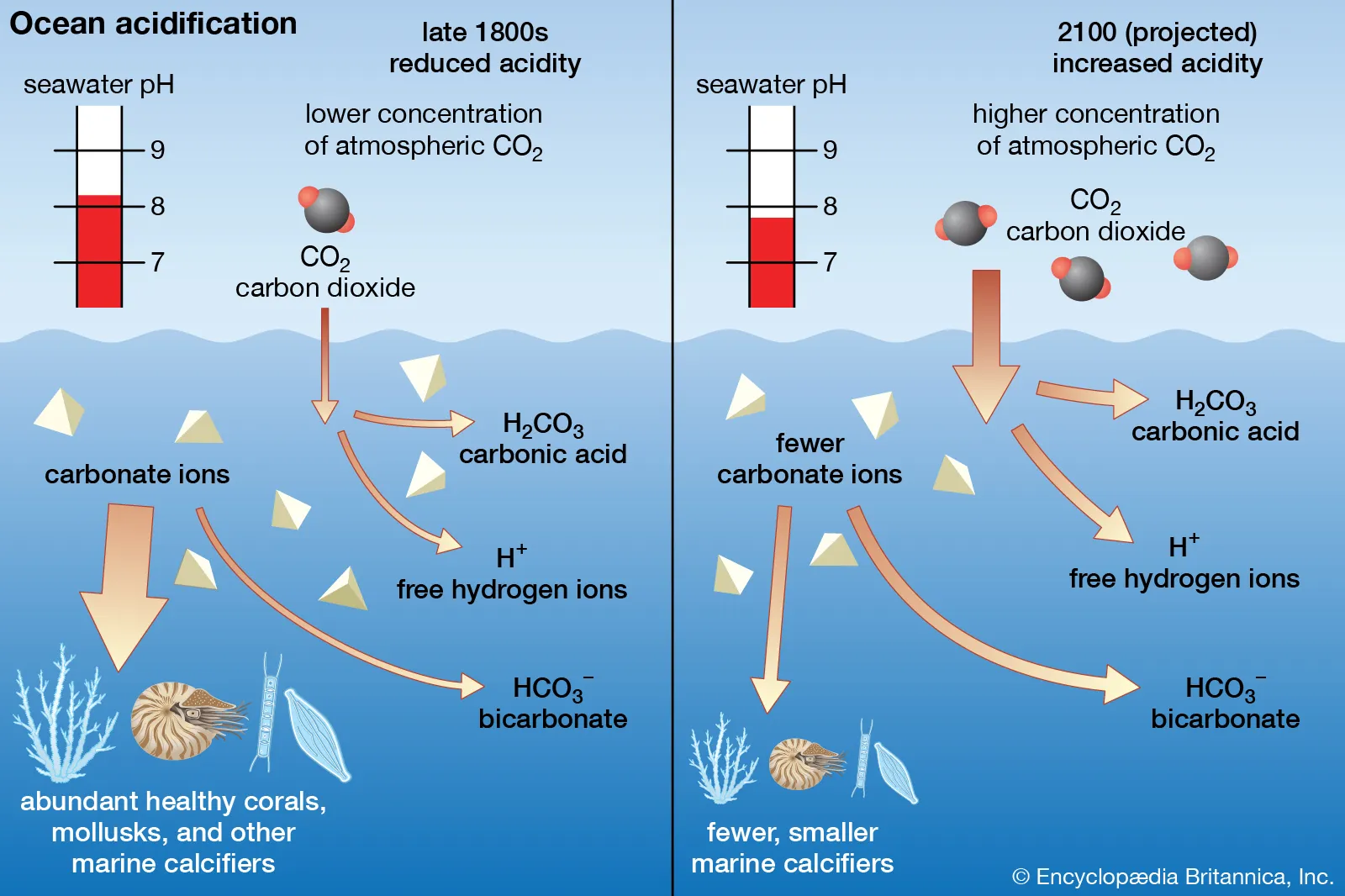
Image Source: Encycolopedia Britannica
Sea Level Rise:
Sea level rise, driven by melting polar ice caps and the thermal expansion of seawater, impacts coral reefs in multiple ways. Healthy reefs may grow vertically to keep pace with rising seas, but factors like sedimentation from coastal erosion and increased wave action can smother and stress corals. These stressors, combined with other climate-related challenges such as ocean warming, can inhibit coral growth and survival.
What Can Be Done?
The fight to save coral reefs from climate change requires global and local actions:
– Reduce Carbon Emissions: Limiting the rise in global temperatures through the reduction of CO2 emissions is the most critical factor. A global shift toward renewable energy sources, sustainable industry practices, and reduced fossil fuel consumption is key to slowing the pace of climate change and allowing reefs to recover.
– Coral Restoration Initiatives: Projects focusing on coral propagation, such as growing more resilient coral species, can help restore damaged areas. Artificial reefs and coral nurseries are also being used to support regrowth in areas heavily affected by bleaching and other climate-related damage. See our Yaf Keru Reef Restoration project which after a 3 year pilot phase demonstrated the feasibility of community-based reef restoration
– Building Reef Resilience: Conservation initiatives that protect coral reefs from additional stressors, such as overfishing and pollution, are crucial. Healthier, less stressed reefs have a better chance of surviving the effects of climate change.
– Community Engagement and Awareness: Local communities, especially those that rely on reef ecosystems for livelihoods, play an essential role in protecting these environments. Sustainable fishing practices, reef-friendly tourism, and pollution reduction are vital steps toward building resilience in coral reef systems.
Addressing climate change is essential to giving coral reefs a fighting chance. With coordinated global efforts and localised conservation initiatives, there is still hope for these precious ecosystems.
100% of your donation goes to
the field.
If left unchecked, 90% of coral reefs will be threatened by 2030, with almost all reefs facing, high, very high, or critical threat levels by 2050.
If we don’t act now, future generations will not have the privilege of seeing a live coral reef, let alone receive the benefits that coral reefs provide, including food, coastal protection, livelihoods and medicine.
In Raja Ampat, Indonesia, the most biodiverse coral reefs on Earth are under threat; rapid and unsustainable development combined with climate change threaten the future of these reefs, along with the food security, heritage and livelihoods of many.
Your contribution today has a direct impact in enabling our team to work with local people to Restore, Protect and Conserve reefs in the world’s last remaining coral stronghold.
We cannot do it alone, but with your contribution we can do it together.
100% of your donation goes to
the field.
If left unchecked, 90% of coral reefs will be threatened by 2030, with almost all reefs facing, high, very high, or critical threat levels by 2050.
If we don’t act now, future generations will not have the privilege of seeing a live coral reef, let alone receive the benefits that coral reefs provide, including food, coastal protection, livelihoods and medicine.
In Raja Ampat, Indonesia, the most biodiverse coral reefs on Earth are under threat; rapid and unsustainable development combined with climate change threaten the future of these reefs, along with the food security, heritage and livelihoods of many.
Your contribution today has a direct impact in enabling our team to work with local people to Restore, Protect and Conserve reefs in the world’s last remaining coral stronghold.
We cannot do it alone, but with your contribution we can do it together.
Copyright © The SEA People 2016-2026. All rights reserved. This website is copyright monitored and protected.
Yayasan Orang Laut Papua is a registered NGO under the Ministry of Law and Human Rights Republic of Indonesia. Number AHU-0016408. Year 2019. The SEA People is a registered Charitable Association under the Gouvernement de la République in France (Numero Identification Siren 853074300) and serves as an administrative and fundrasing base for supporting the fieldwork of Yaysan Orang Laut Papua. Privacy Policy Terms & Conditions