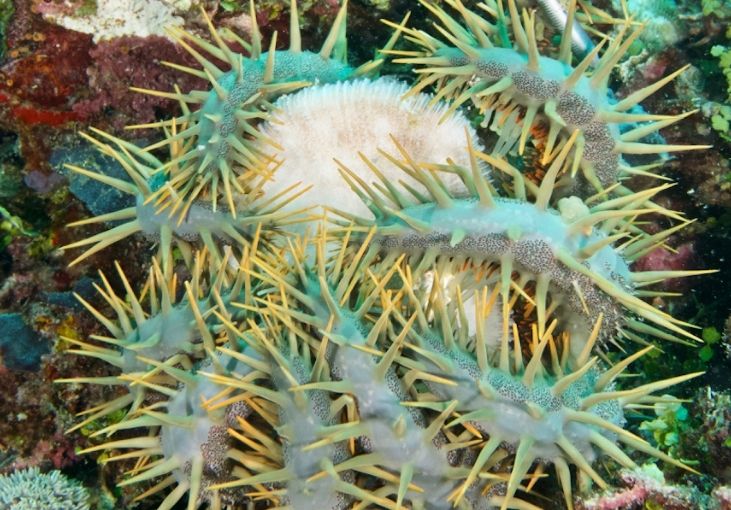
The Crown of Thorns Starfish (COTS) poses a significant threat to coral reefs due to its voracious appetite for coral polyps. While these starfish are native to reef ecosystems, their population spikes can lead to widespread coral destruction. Outbreaks of COTS are often linked to human-induced stressors, such as overfishing of their natural predators and nutrient-rich runoff from agriculture that promotes larvae survival. In high numbers, COTS can rapidly strip reefs of their coral cover, leaving behind barren underwater landscapes that take years to recover.
What Causes COTS Outbreaks?
COTS outbreaks are complex and typically result from a combination of factors:
Pollution and nutrient runoff: Agricultural fertilisers and untreated sewage that find their way into the ocean can promote algal blooms, which provide food for COTS larvae, allowing more to survive and grow.
Overfishing: Removing the natural predators of COTS, such as giant triton snails, triggerfish, and large wrasses, enables these starfish populations to grow unchecked. This ecological imbalance leaves the reefs vulnerable to COTS proliferation.
Climate change: Warmer ocean temperatures and changing environmental conditions can also play a role in creating favourable conditions for COTS to thrive.
Impacts on Coral Reefs
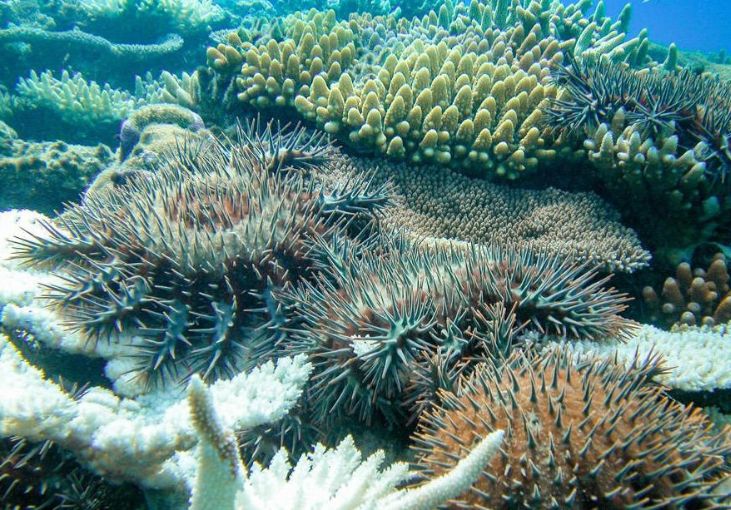
A single COTS can consume vast quantities of coral in a short time. When an outbreak occurs, thousands of starfish descend on a reef, devouring coral polyps at a rate that prevents natural regeneration. The result is a rapid decline in coral cover, which destabilises the reef structure and disrupts the entire marine ecosystem, affecting fish populations and other species that depend on the reef for survival.
What Can Be Done?
Managing COTS outbreaks requires a multi-faceted approach:
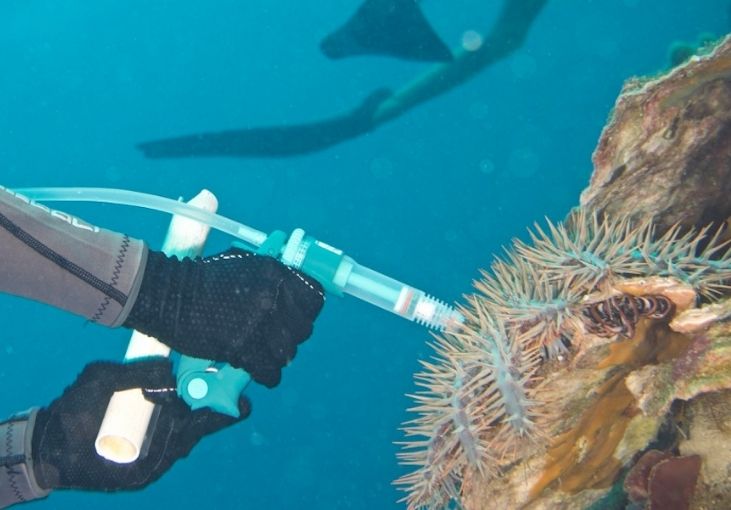
Manual removal: In some regions, divers have manually culled COTS populations, though this method is labour-intensive and challenging on a large scale.
Biological control: Research is underway to explore natural solutions, such as using the giant triton snail, a natural predator of COTS, to keep their numbers in check.
Improving water quality: Reducing nutrient pollution from agricultural runoff and improving waste management in coastal areas can help prevent the conditions that lead to COTS outbreaks.
Reef restoration: Restoring damaged reefs and enhancing coral resilience are also critical components of the long-term strategy for managing the impact of COTS.
Ongoing research into the causes and solutions for COTS outbreaks is vital for preserving coral ecosystems. Local communities, conservation organisations, and governments must work together to implement effective management strategies that protect reefs from the destructive impact of COTS while maintaining the ecological balance of the marine environment.
Learn more about Crown of Thorns Starfish and ongoing managemetn efforts in Raja Ampat.
100% of your donation goes to
the field.
If left unchecked, 90% of coral reefs will be threatened by 2030, with almost all reefs facing, high, very high, or critical threat levels by 2050.
If we don’t act now, future generations will not have the privilege of seeing a live coral reef, let alone receive the benefits that coral reefs provide, including food, coastal protection, livelihoods and medicine.
In Raja Ampat, Indonesia, the most biodiverse coral reefs on Earth are under threat; rapid and unsustainable development combined with climate change threaten the future of these reefs, along with the food security, heritage and livelihoods of many.
Your contribution today has a direct impact in enabling our team to work with local people to Restore, Protect and Conserve reefs in the world’s last remaining coral stronghold.
We cannot do it alone, but with your contribution we can do it together.
100% of your donation goes to
the field.
If left unchecked, 90% of coral reefs will be threatened by 2030, with almost all reefs facing, high, very high, or critical threat levels by 2050.
If we don’t act now, future generations will not have the privilege of seeing a live coral reef, let alone receive the benefits that coral reefs provide, including food, coastal protection, livelihoods and medicine.
In Raja Ampat, Indonesia, the most biodiverse coral reefs on Earth are under threat; rapid and unsustainable development combined with climate change threaten the future of these reefs, along with the food security, heritage and livelihoods of many.
Your contribution today has a direct impact in enabling our team to work with local people to Restore, Protect and Conserve reefs in the world’s last remaining coral stronghold.
We cannot do it alone, but with your contribution we can do it together.
Copyright © The SEA People 2016-2026. All rights reserved. This website is copyright monitored and protected.
Yayasan Orang Laut Papua is a registered NGO under the Ministry of Law and Human Rights Republic of Indonesia. Number AHU-0016408. Year 2019. The SEA People is a registered Charitable Association under the Gouvernement de la République in France (Numero Identification Siren 853074300) and serves as an administrative and fundrasing base for supporting the fieldwork of Yaysan Orang Laut Papua. Privacy Policy Terms & Conditions