A fragile future for raja ampat
Reefs At RiskWith its remote location and poor accessibility, to date relative isolation and low human population (50,000 inhabitants) has been Raja Ampat’s greatest defence against overuse and exploitation. However, rich coastal and marine resources combined with increasing accessibility have made it a target for economic development activities ranging from marine tourism, through to fisheries, mining and logging.
Now, in addition to the burden of human induced climate change that is affecting reefs globally, the reefs of Raja Ampat face a series of new and emerging threats from locally developing industries. These challenges are outlined below and, while currently relatively low in impact and area-specific, they require proactive management as the region and its rich natural resources grow in popularity and reputation. Addressing these issues now is essential to mitigate future impacts, ensure continued reef resilience, and support sustainable community development.
The world’s coral reef’s are disappearing. Up to half have already been lost or severely damaged, and the negative development continues. Scientists predict that all corals will be threatened by 2050 and that 75 percent will face high to critical threat levels. If we do not correct our course, by 2070, coral reefs could be gone altogether. Source: The World Counts
Threats to the Reefs
RAPID & UNSUSTAINABLE DEVELOPMENT
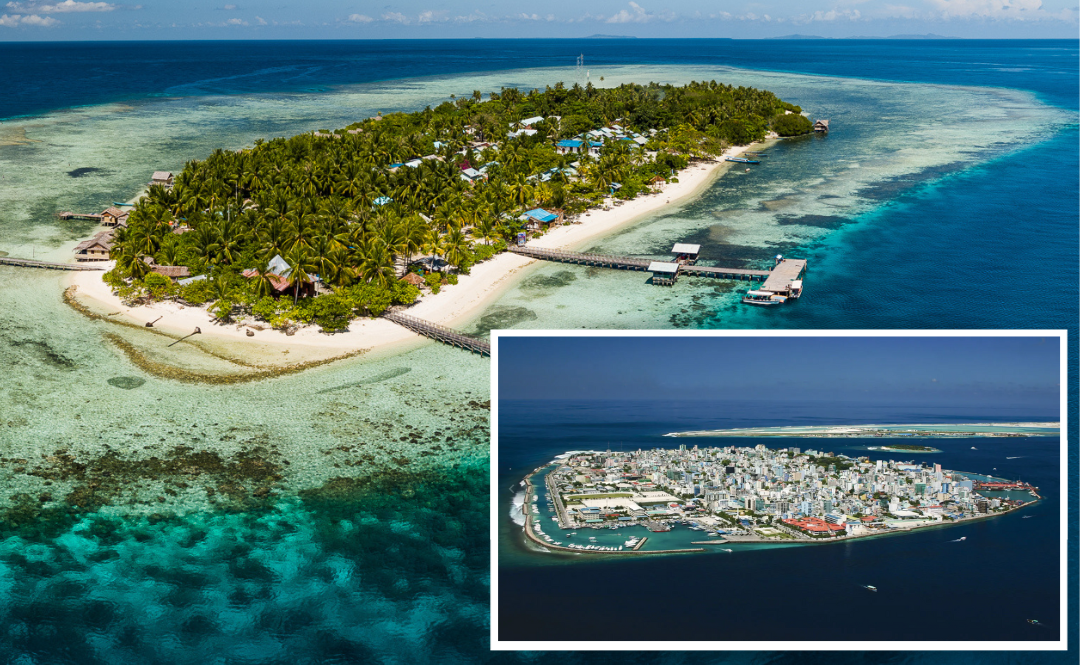
Rapid and unsustainable development in Raja Ampat, largely driven by (area specific) tourism and the associated coastal development, infrastructure and population expansion expansion, has led to significant environmental damage in some areas, including pollution and the physical destruction of coral reefs. With fragile ecosystems already stressed by climate change, the combined effects of pollution and physical reef damage have put Raja Ampat’s unique marine life at severe risk.
For local communities, this rapid development presents both opportunities and challenges. While it creates jobs and improves access to services, it can also influence and/or threatens cultural traditions and the connection between local people and their natural environment. The physical destruction and degradation of the coral reefs, a vital source of food and livelihood, alongside the rapid introduction of external influences, risks eroding long-standing practices. Without a genuine effort and committment from all stakeholders for sustainable planning, this unchecked growth may permanently harm both Raja Ampat’s environment and its cultural identity.
Read more at ‘Changing Lives – The Impact of Development’ .
OVERCROWDING & REEFS OVER CARRYING CAPACITY
December 2023: 60+ people and x3 mantas | Overcrowding at Manta Ridge | A booking system similar to the Manta Sandy Dive Site has now been implemented to alleviate overcrowding, enhance visitor experience, and most importantly alleviate pressure on manta aggregations.
—
In the more touristic areas of Raja Ampat, reefs are increasingly suffering from overcrowding as the region’s growing popularity as a dive destination pushes coral ecosystems beyond their natural carrying capacity.
A study by Renoldy L. Papilaya et al. (2019) estimated that many of the more popular reefs in Raja Ampat are already well over their ecological carrying capacity —the threshold for visitor use and incidental damage that the ecosystem can sustain without being degraded.
Despite this, visitor numbers continue to grow, exacerbating the stress on these fragile environments. The high volume of divers and snorkelers can lead to physical damage, such as trampling and anchor drops, while the presence of too many tourists disturbs marine wildlife, causing stress to species like reef fish, turtles, and manta rays. The constant movement of boats can also stir up sediment, which blocks sunlight and impedes coral growth.
This overcrowding not only causes ecological harm but also undermines the region’s allure as an “untouched” marine paradise. Tourists are drawn to Raja Ampat for its reputation as one of the last pristine coral reef systems on Earth, yet the reality of (over)crowded dive sites tells a different story. As more visitors flock to already overburdened reefs, the natural beauty and biodiversity that define Raja Ampat are eroding, diminishing the very experience that travelers seek.
Without effective management to control visitor numbers and more responsible tourism behaviour in order to protect the reefs, Raja Ampat risks losing its status as a destination known for its “untouched” ecosystems, replaced by the ever growing impact of overcrowding on both the environment and the visitor experience.
Read More at “Raja Ampat – Navigating the impact of Tourism”.
RUBBISH & PLASTIC POLLUTION
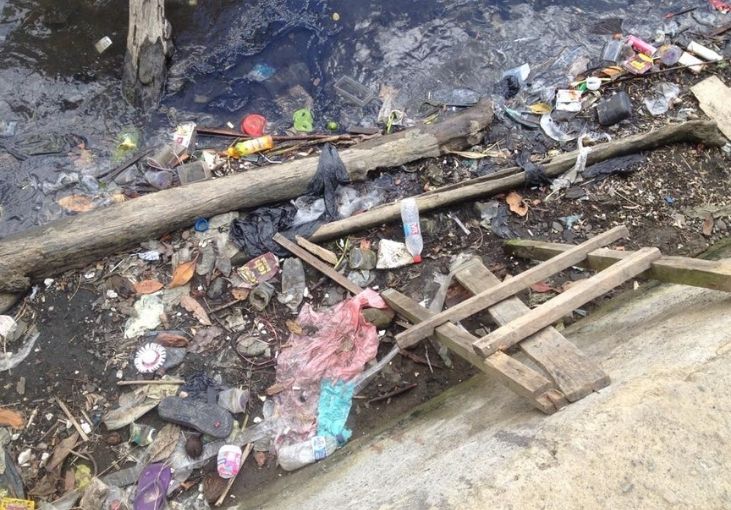
Rapid and unsustainable development of in parts of Raja Ampat has led to a significant increase in waste, which poses a serious threat to the health of the region’s coral reefs. With limited waste management infrastructure in place, much of the rubbish generated by resorts, homestays, local communities and boats ends up being improperly disposed of, often finding its way into the ocean. Plastics, in particular, are a major problem, as they can smother coral reefs, block sunlight, and leach harmful chemicals into the water.
Marine life is also at risk, with animals becoming entangled in debris or ingesting microplastics. In a region as ecologically fragile as Raja Ampat, the lack of adequate waste management facilities, combined with understanding and will to reduce waste and dispose of in a considered manner, exacerbates the problem, as local communities and tourism operators struggle to cope with the increasing volume of rubbish. The cumulative effect of this unmanaged waste threatens to degrade the very ecosystems that local communities rely on for sustenance and income, and tourists travel to experience.
SEDIMENT, CHEMICAL and NUTRIENT POLLUTION
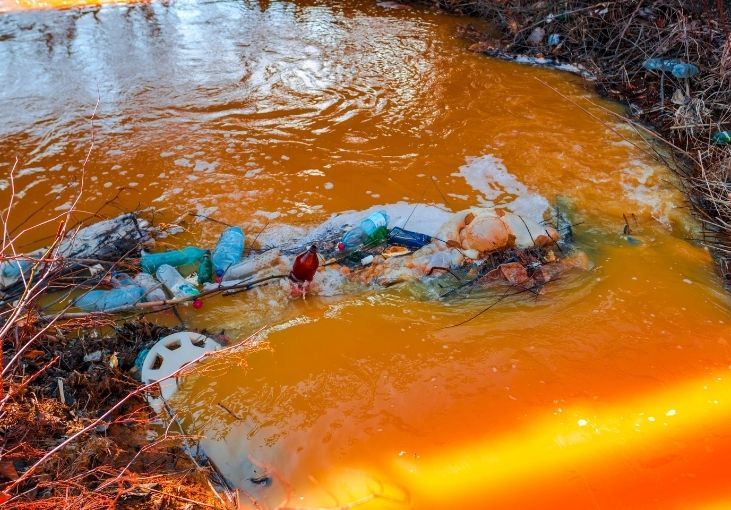
Human activities, including the construction ports, marinas, of resorts, homestays and other coastal infrastructure, combined with increased boat activity, have led to increased sediment, sewage, and nutrient runoff into the marine environment. This pollution can smother coral reefs and trigger eutrophication, a process in which excessive nutrients promote the growth of toxic algal blooms, depleting oxygen levels and threatening the survival of marine organisms.
Raja Ampat, runoff from urban and other coastal development has created conditions that endanger reef health.
SUBSTRATE STABILISATION; THE AVALANCE PHENOMENON
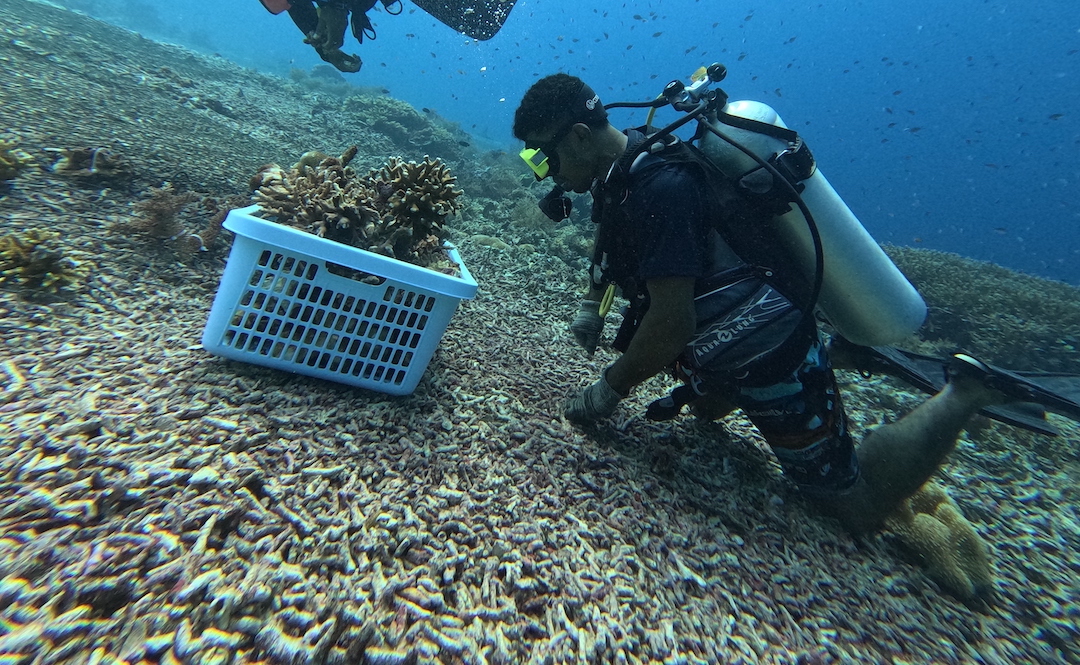
Whilst so much of Raja Ampat remains relatively pristine, amongst the abundance lies the effect of human interference and influence; including large areas of degraded reef and coral rubble caused by destructive fishing practices (dynamite and cyanide fishing) from the 80s through to early 2000s. To this day, many of these destroyed reefs have not recovered. These degraded reefs cannot regenerate without assistance, and additionally pose threats to healthy reefs located nearby (see diagram).
In collaboration with local communities, The SEA People restore degraded areas of reef using substrate stabilization techniques that enable coral polyps to successfully settle and grow, to eventually re-establish large and healthy reef networks that support the abundance of life Raja Ampat is known for.
Read More at “Yaf Keru Reef Restoration & Conservation”
CORAL DEGRADATION FROM PHYSICAL DAMAGE: ANCHORS, BOATS, FINS & FEET
An anchor and chain thrown carelessly on healthy reef, at 34m, in Yenbuba Bay, Raja Ampat.
—
Raja Ampat’s complex currents and terrain pose significant challenges for safe anchoring by liveaboards and private vessels, often resulting in coral reef damage. Limited mooring infrastructure leaves vessels with little choice but to drop anchors, frequently in thriving coral areas at depths of 35–45 meters. This, coupled with inadequate mapping and occasional negligence by operators, causes substantial, often irreversible reef damage, especially at tourism hotspots. Anchors dislodge corals, crush structures, and disrupt habitats that take decades or longer to recover.
Increasing (area specific) tourism density exacerbates these issues, as shallow reefs near popular snorkeling and diving sites suffer from trampling, handling, and poor diving practices resulting in kicking and grabbing. Visitors lacking awareness or thorough guidance on responsible reef interaction, combined with a direct lack of consequence or feedback from their guides/hosts, can unintentionally contribute to the degradation of the very ecosystems they come to admire.
To address these threats, key solutions include expanding mooring infrastructure, developing detailed navigational maps, and fostering environmental education for both operators and tourists.
The SEA People is currently part of a working group actively rolling out a network of mooring systems within Raja Ampat’s MPAs.
CROWN OF THORNS STARFISH
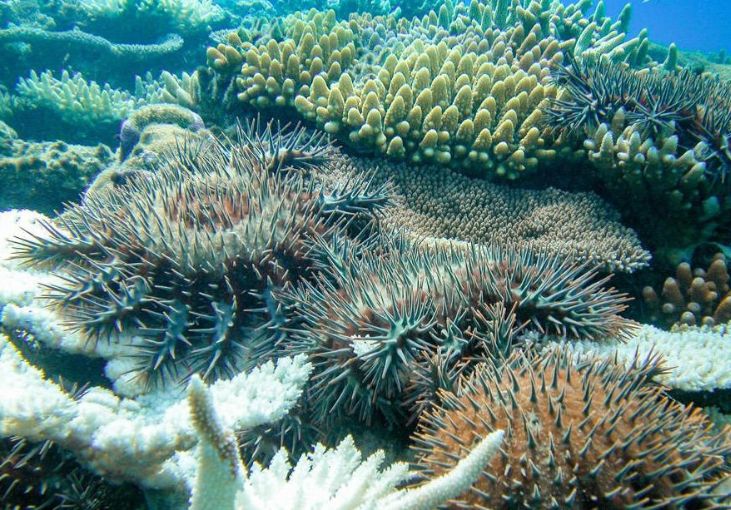
These coral eating starfish can devastate entire reefs when their populations abnormally increase in response to pollution, warming, or overfishing of their predators. There are several reefs within the Marine Parks that have experienced COTs populations at outbreak level. This plague-like situation is difficult to evaluate and can only be contained through collaboration between stakeholders to mitigate these outbreaks. The SEA People have established a participative citizen science approach that is open to any individual or organisation that wishes to contribute.
Read More at “Crown of Thorns in Raja Ampat”
CLIMATE CHANGE
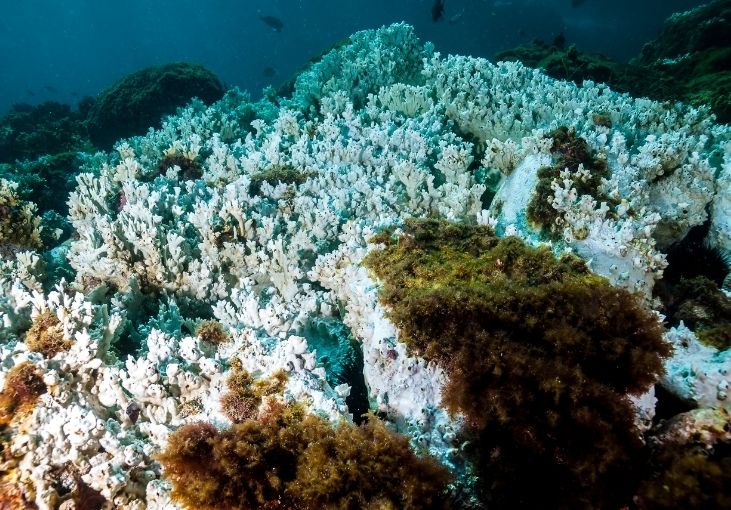
Climate change poses a significant threat to coral reefs globally, as rising sea temperatures lead to coral bleaching, and ocean acidification weakens coral structures, making them more vulnerable to disease. Whilst to date, regional coral reefs in Raja Ampat have demonstrated an increased resistance and resiliance to bleaching, in a region as biologically diverse as Raja Ampat, these effects could be devastating, potentially altering the delicate balance of its marine ecosystems. We aim to address these challenges through coral restoration projects, community engagement, and sustainable tourism practices.
However, protecting these reefs requires global action and heightened awareness of how our daily choices impact coral ecosystems, even if we don’t live near them. Ironically, those most affected by climate change—such as small, remote communities like those in Raja Ampat—are often the ones who contribute the least to the problem. Travelling to these regions, while offering a glimpse into their beauty, also increases carbon emissions and localised environmental issues, further threatening the health of their reefs.
Read More about the impact of travel in “Your Carbon Footprint when visiting Raja Ampat, and How to Reduce it”
It’s Now or Never
AND IT’S UP TO US
At a time when coral reef degradation is occurring worldwide due to human activity, and in response to human induced climate change, it is essential and common sense to design and develop community-based conservation tools to respond to these current and future degradation issues. Rather than waiting for the pristine local reefs of Raja Ampat to be destroyed, become damaged or lose their natural resilience, we collaborate with local communities in projects that support the sustainable use and protection of marine resources, and direct restore degraded reefs. The SEA People are currently working on mutually beneficial stakeholder based solutions, in order to address these new and emerging threats to the reefs of Raja Ampat and the local communities who depend upon them.
Yaf Keru Reef Restoration & Conservation
RESTORE, PROTECT, CONSERVE
Yaf Keru (which means ‘coral garden’ in a local Papuan dialect) is our coral reef restoration and conservation program, that addresses environmental threats through active reef restoration combined with community engagement, and education. The program trains and employs local community members, empowering them to restore damaged reefs and protect healthy reefs, while creating sustainable livelihoods. Additionally, Yaf Keru collaborates with the tourism industry, educating operators and visitors on sustainable practices and encouraging responsible interaction with marine environments. This holistic approach fosters long-term reef protection, ensuring that both local communities and the tourism sector contribute to preserving Raja Ampat’s fragile ecosystems.
Read More at “Yaf Keru Reef Restoration and Conservation”.
100% of your donation goes to
the field.
Donateur français Cliquez ici
If left unchecked, 90% of coral reefs will be threatened by 2030, with almost all reefs facing, high, very high, or critical threat levels by 2050.
If we don’t act now, future generations will not have the privilege of seeing a live coral reef, let alone receive the benefits that coral reefs provide, including food, coastal protection, livelihoods and medicine.
In Raja Ampat, Indonesia, the most biodiverse coral reefs on Earth are under threat; rapid and unsustainable development combined with climate change threaten the future of these reefs, along with the food security, heritage and livelihoods of many.
Your contribution today has a direct impact in enabling our team to work with local people to Restore, Protect and Conserve reefs in the world’s last remaining coral stronghold.
We cannot do it alone, but with your contribution we can do it together.
100% of your donation goes to
the field.
Donateur français Cliquez ici
If left unchecked, 90% of coral reefs will be threatened by 2030, with almost all reefs facing, high, very high, or critical threat levels by 2050.
If we don’t act now, future generations will not have the privilege of seeing a live coral reef, let alone receive the benefits that coral reefs provide, including food, coastal protection, livelihoods and medicine.
In Raja Ampat, Indonesia, the most biodiverse coral reefs on Earth are under threat; rapid and unsustainable development combined with climate change threaten the future of these reefs, along with the food security, heritage and livelihoods of many.
Your contribution today has a direct impact in enabling our team to work with local people to Restore, Protect and Conserve reefs in the world’s last remaining coral stronghold.
We cannot do it alone, but with your contribution we can do it together.
Copyright © The SEA People 2016-2026. All rights reserved. This website is copyright monitored and protected.
Yayasan Orang Laut Papua is a registered NGO under the Ministry of Law and Human Rights Republic of Indonesia. Number AHU-0016408. Year 2019. The SEA People is a registered Charitable Association under the Gouvernement de la République in France (Numero Identification Siren 853074300) and serves as an administrative and fundrasing base for supporting the fieldwork of Yaysan Orang Laut Papua. Privacy Policy Terms & Conditions