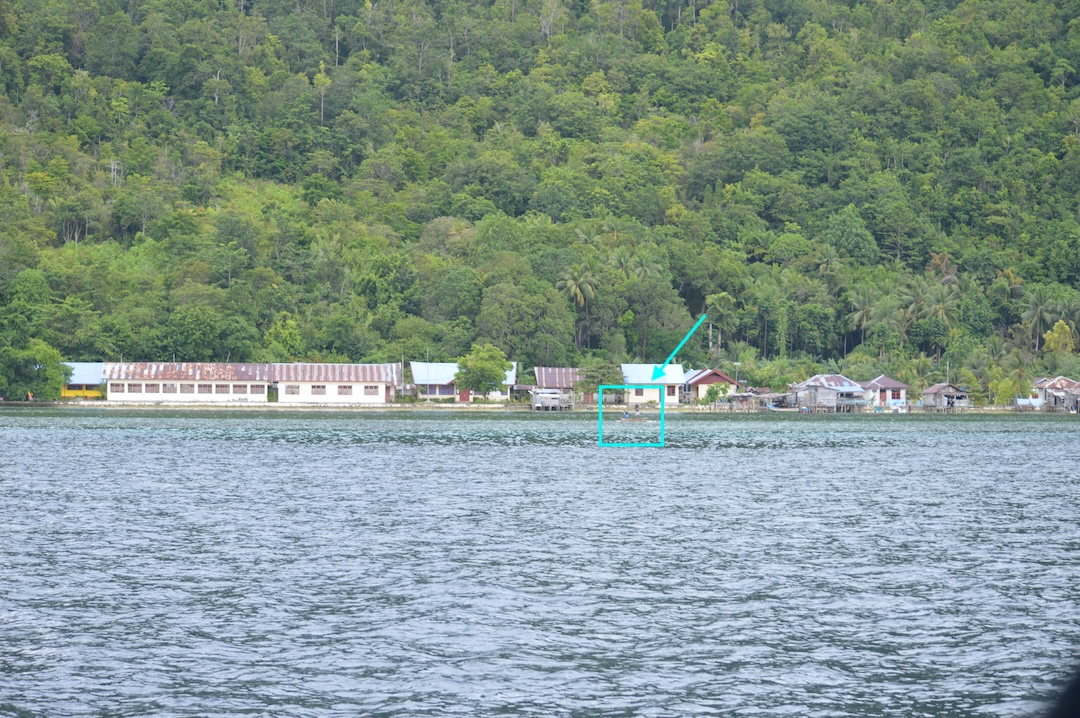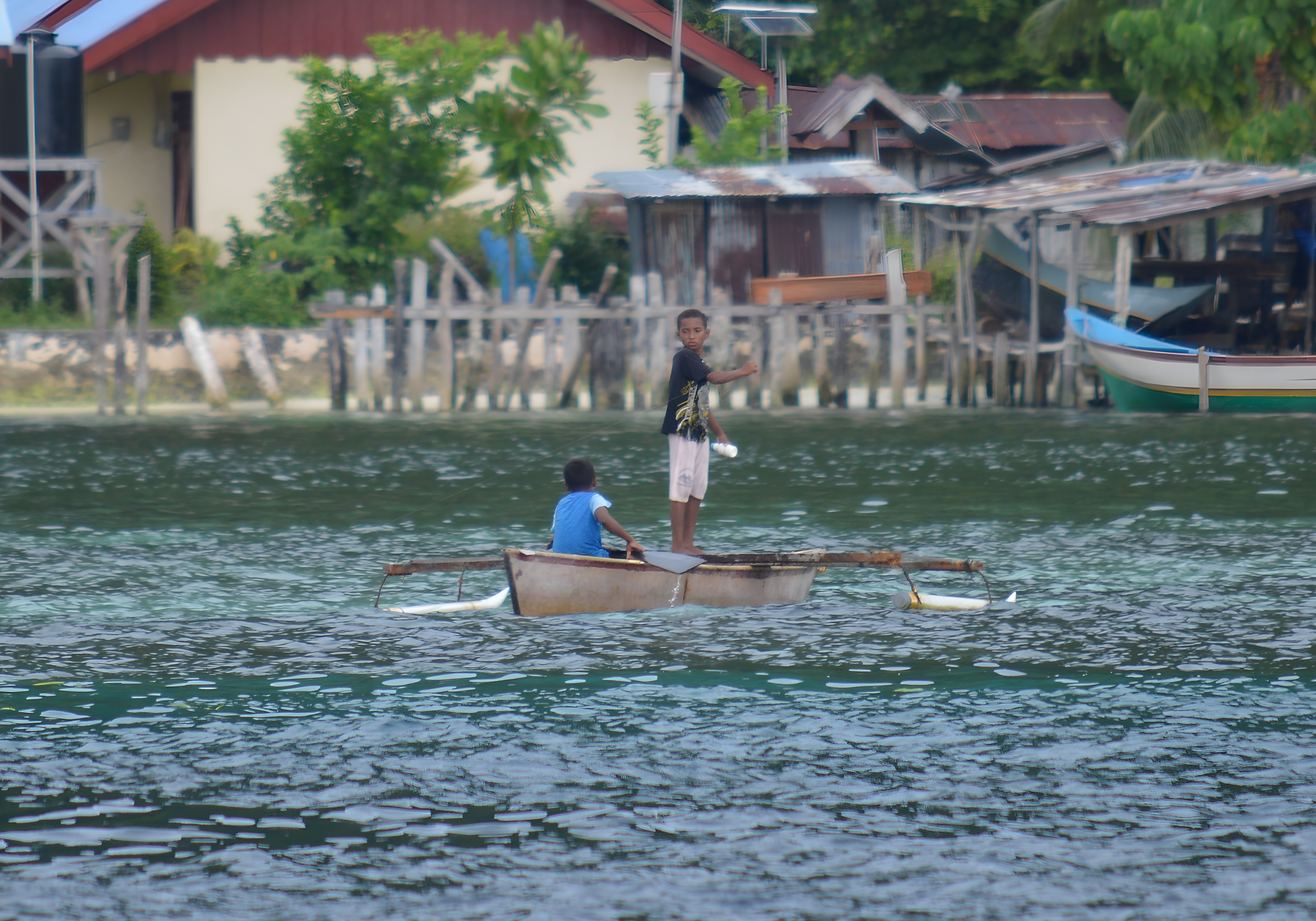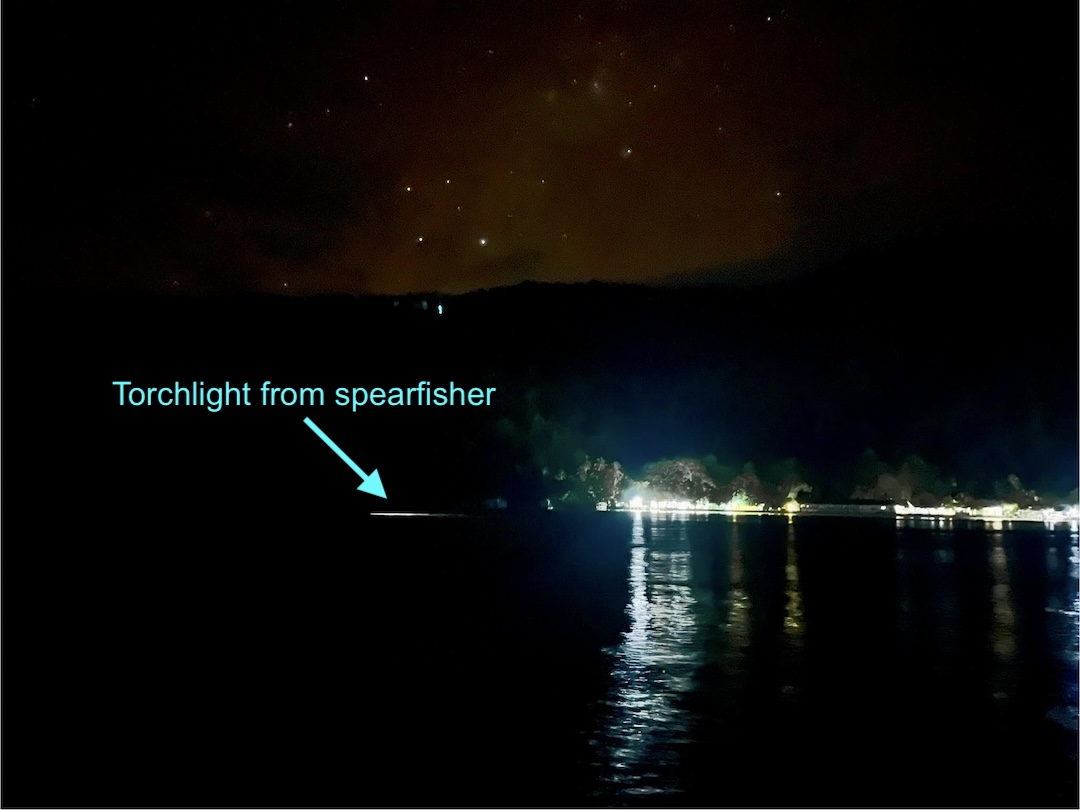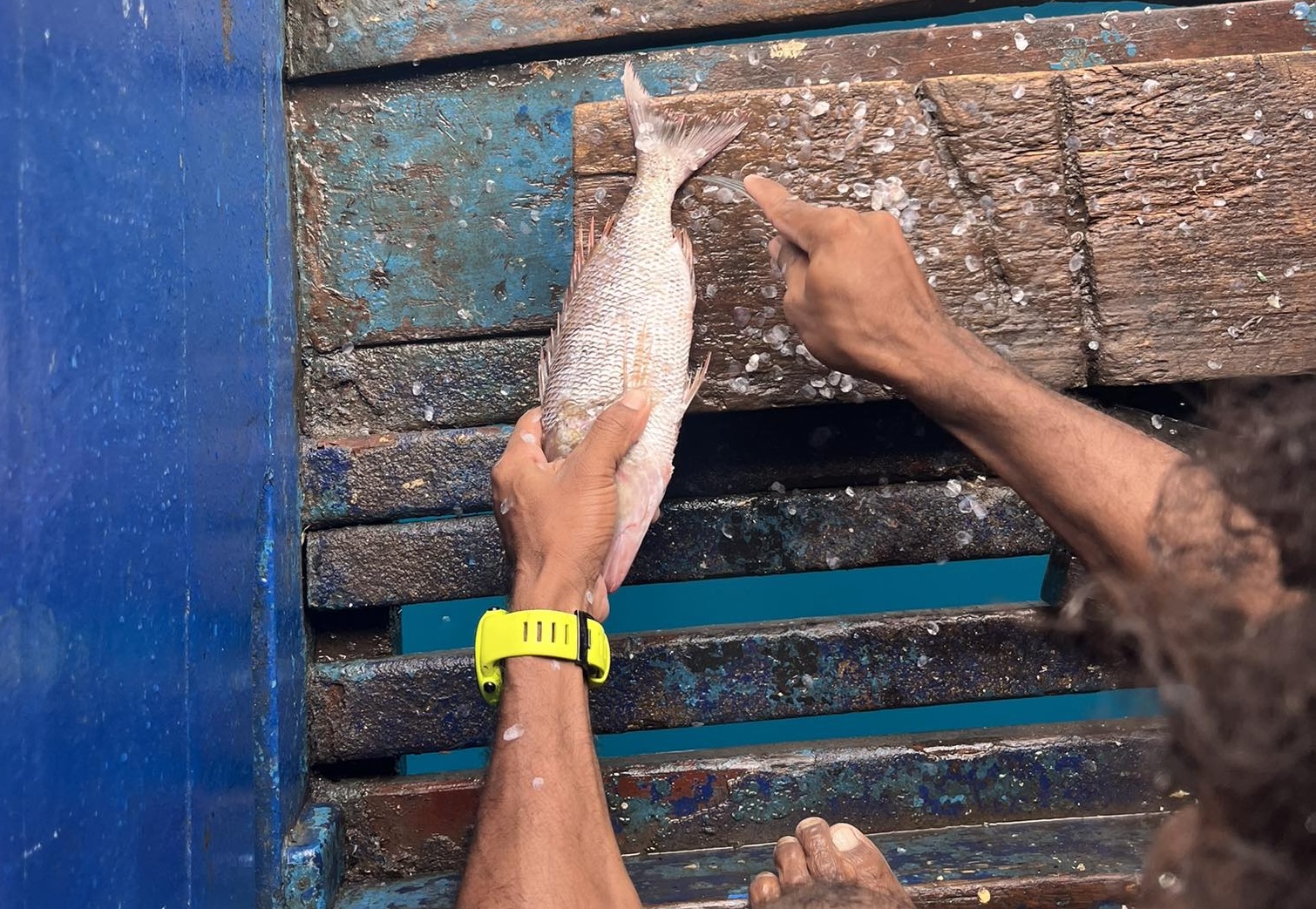
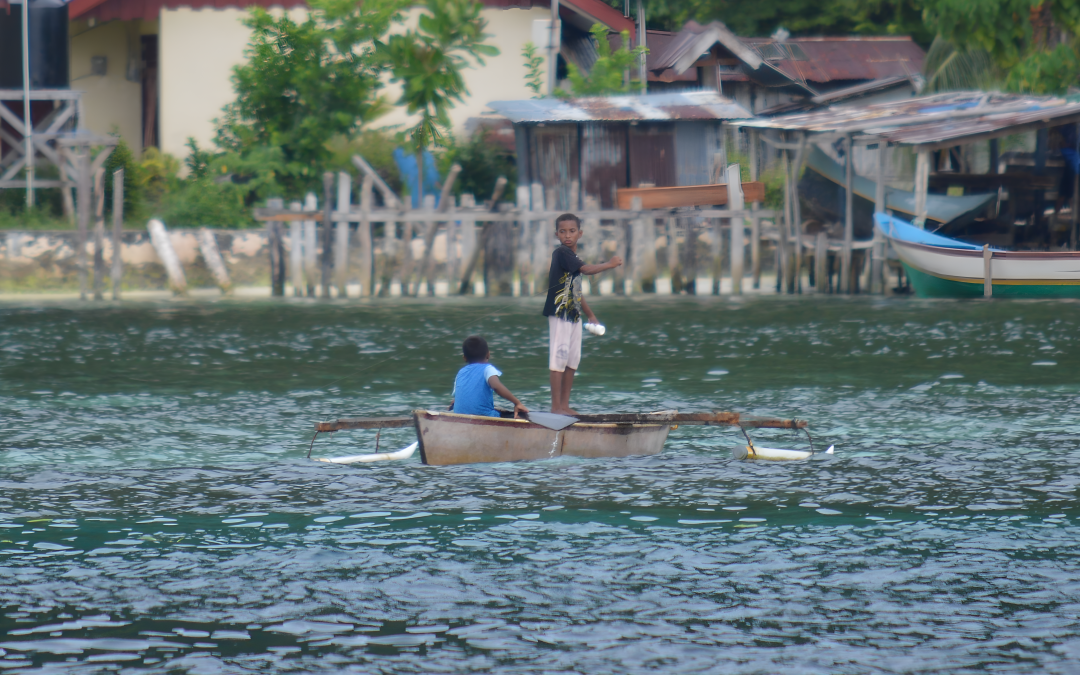
Last night, we spotted a spearfisher on the reef at Yaf Keru (today we received a fish from them). Early this morning, these two young boys in a hand-carved canoe fished with nothing but a line wrapped around a plastic bottle. In the wind-shadow of Mansuar Island, where the sea stays calmer during the southerlies and storms – when fishing further afield is too challenging or dangerous, we’ve sometimes seen two or three small dugouts just like theirs. Families from the village, fishing for dinner. Familiar faces. Small-scale. Low-impact. On their reef.
At first glance, fishing activity on Yaf Keru seem like a problem. But look a little closer, and it’s actually a good sign. Because this reef—once dead, broken, and barren—is alive again. It’s productive. It’s providing.
And this is part of the vision for Yaf Keru.
What we’re doing here isn’t just about coral. It’s about people. It’s about restoring ecological function to reefs that were destroyed decades ago — so that nature can begin to give back to those who’ve always depended on her. For food. For safety. For identity.
We’ve worked alongside the community to make this happen. At their request, we’re collaborating to ensure the site remains available only for subsistence-level fishing by local families.
But here’s where things get complicated.
As the reef recovers, tourism interest has grown. Just by being here and being active on the site, this tourism ‘high season’ it seems we’ve brought extra attention the stunning reef below Yaf Keru (the very areas we are attempting to protect) that were once almost completely un-dived by tourism groups – while those in close proximity were over dived. With increasing regularity, we now see dive boats on the site – with varying degrees of diver behaviour, from great divers with good bouyancy and skills… through to photographers (and their guides) holding onto reef restoration… to take photos of reef restoration!! But beyond this, it’s important to recognise this site sits directly adjacent to, and in some areas, directly in front of a village. In front of the church. It’s a village reef.
And here’s the part that we’re not supposed to say out loud: right now, with the exception of one dive operator, boats are diving this site without village permission. That includes big-name ‘eco-operators’— diving, leaving. No consultation. No contribution. No return to the community whose reef they’re entering. We see the instant reaction from our local team; some of whom are from the village in question. We hear the irritation of the village community.
In other parts of Raja Ampat, villages receive a small fee per visiting dive boat – a recognition that the reef is theirs, a contribution to jetty upkeep. We believe this ‘new dive site’, deserves that same respect.
Imagine if you were sitting at home, and a bus load of (mostly) foreign tourists turned up and had a picnic in your garden; no permission from you, no recognition that it’s your place, and no offer of contribution for using the space. It’s the same.
If you’re diving here right in front of the village, at the very least please seek village permission. If you’re profiting from this place and these reefs – whether you’re a guide, resort, or operator – please consider contributing.
Back to the matter of small scale subsistence fishing on Yaf Keru… it made us smile to see this. Of course we’re aware of where it may lead, but so is the community… and we’ll work on this together.
Restoring a reef isn’t just a matter of planting coral. It’s about creating space for recovery. It’s about equity. It’s about local stewardship. Yaf Keru is a living, growing example of community-based reef restoration… and seeing these young boys fishing, receiving a fish from a fisherman, tells us we’re doing pretty ok.
🌊 Want to learn more about Yaf Keru? Go here: 🔗 https://theseapeople.org/yaf-keru-reef-restoration/
Together, we can help ensure that both reefs and the people who depend on them have a future.
Click images to englarge: